Leap of Faith
EARTH
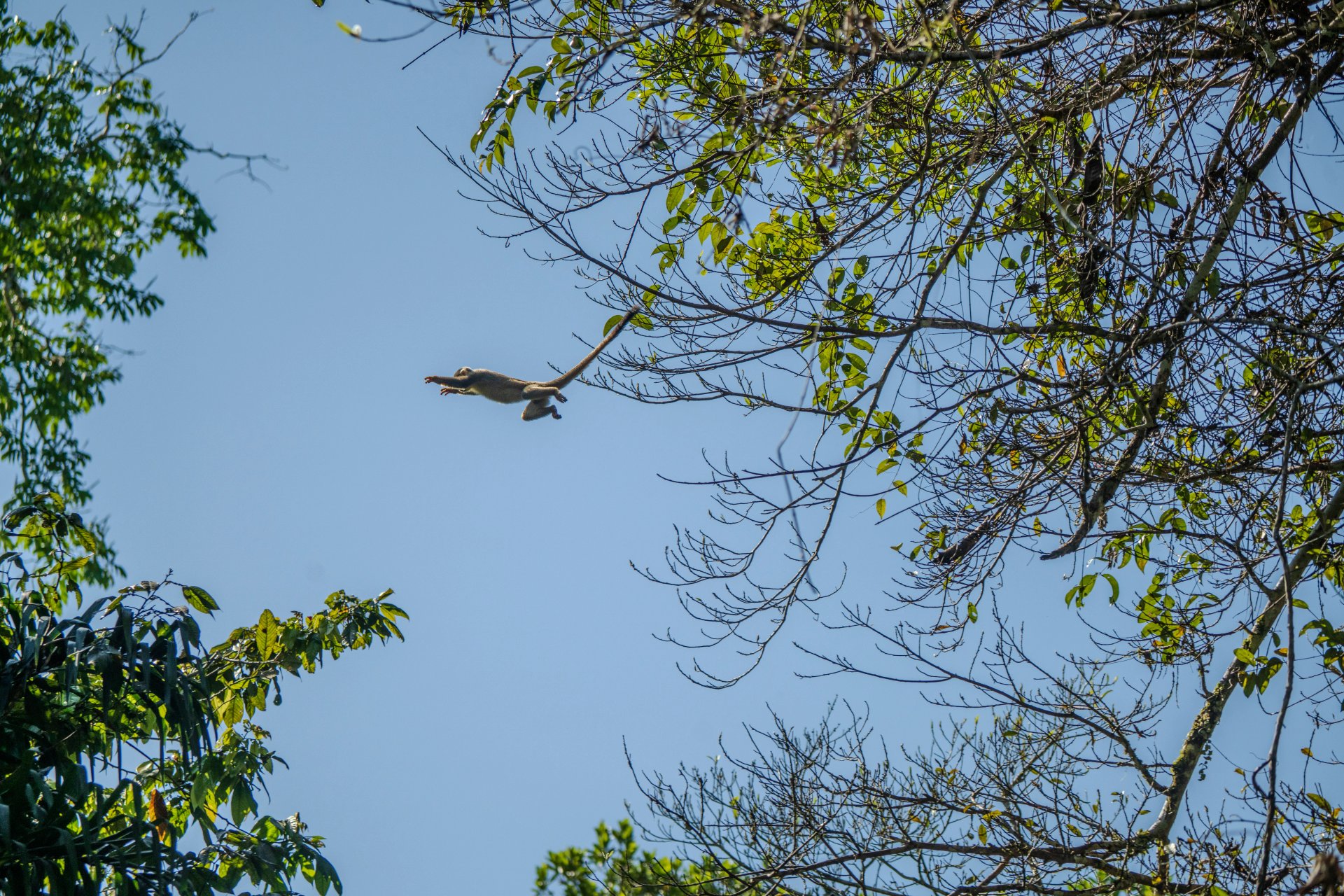
In the high canopy of the Amazon, gravity becomes negotiable. This photograph captures a fleeting, split-second decision — a monkey suspended mid-flight between two branches, limbs outstretched, tail trailing like a rudder against the open sky. There is no safety net here, only instinct and years of arboreal mastery. The bare, skeletal branches on the right contrast with the lush green canopy on the left, framing the animal in a moment of pure kinetic energy against an uninterrupted field of blue. It's a reminder that the rainforest's real architecture isn't the trees themselves, but the negative space between them — the air that its creatures cross a thousand times a day, and that we rarely get to see.
The Watcher Beneath
EARTH
In the Amazon, the forest rarely reveals itself all at once.
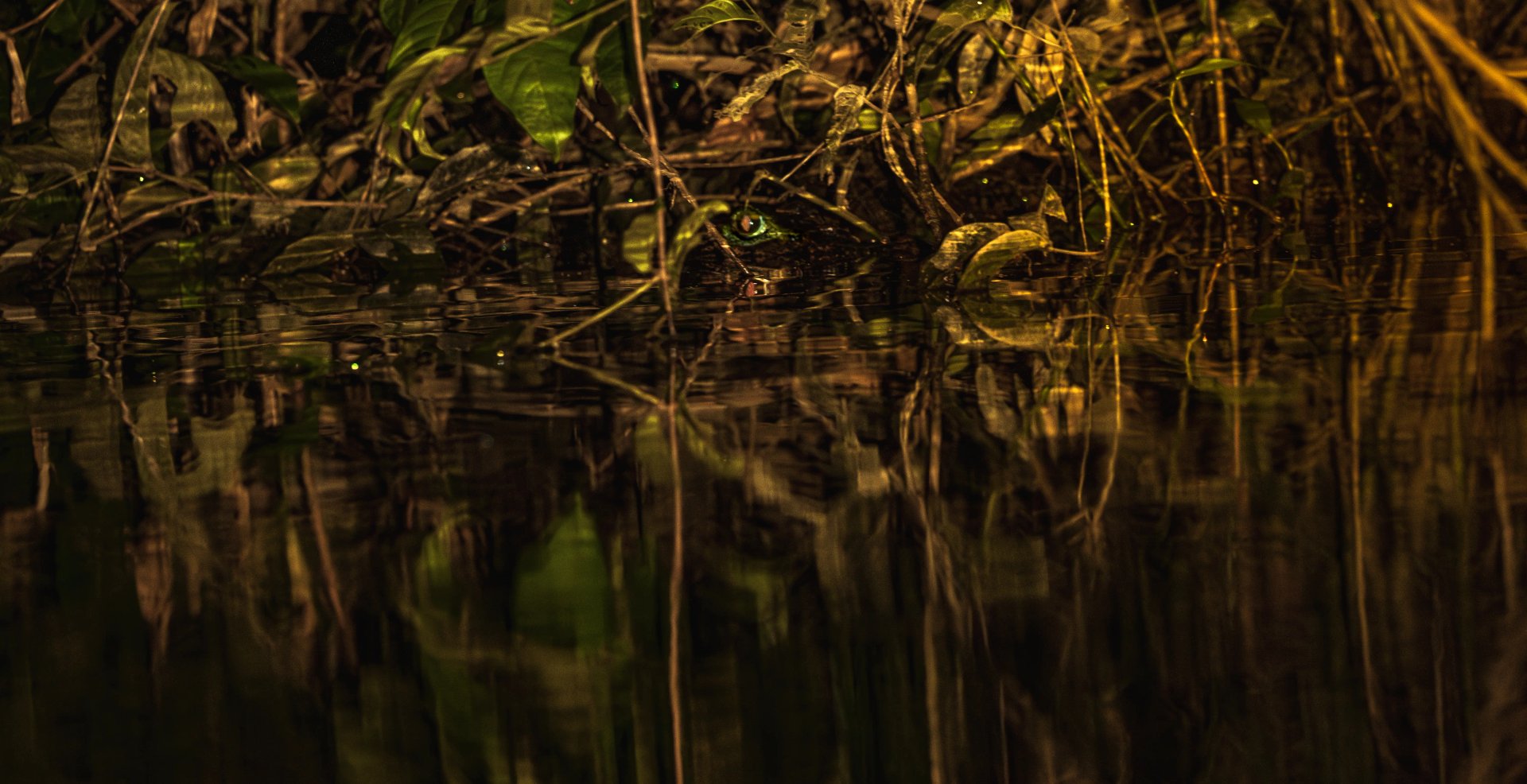
At the surface of a quiet blackwater lagoon, vegetation dissolves into reflection and shadow. Somewhere within that confusion of leaves, roots, and water, an animal waits—almost invisible except for the glint of an eye and the suggestion of a head beneath the surface.
The photograph is less about revealing the animal than about withholding it. The eye becomes the center of the image, asking the viewer to look again, and then again, into the darkness.
In a landscape where survival often depends upon concealment, visibility is fleeting. The boundary between water, forest, reflection, and animal begins to disappear. What initially appears to be an abstract study of the Amazon gradually becomes something more intimate: the realization that the forest is watching back.
I was drawn to this moment because it captures something fundamental about the Amazon—not simply its extraordinary biodiversity, but its mystery. Much of what lives here remains hidden just beyond our perception, revealing itself only for an instant.
Golden Veins of the Igapó
EARTH
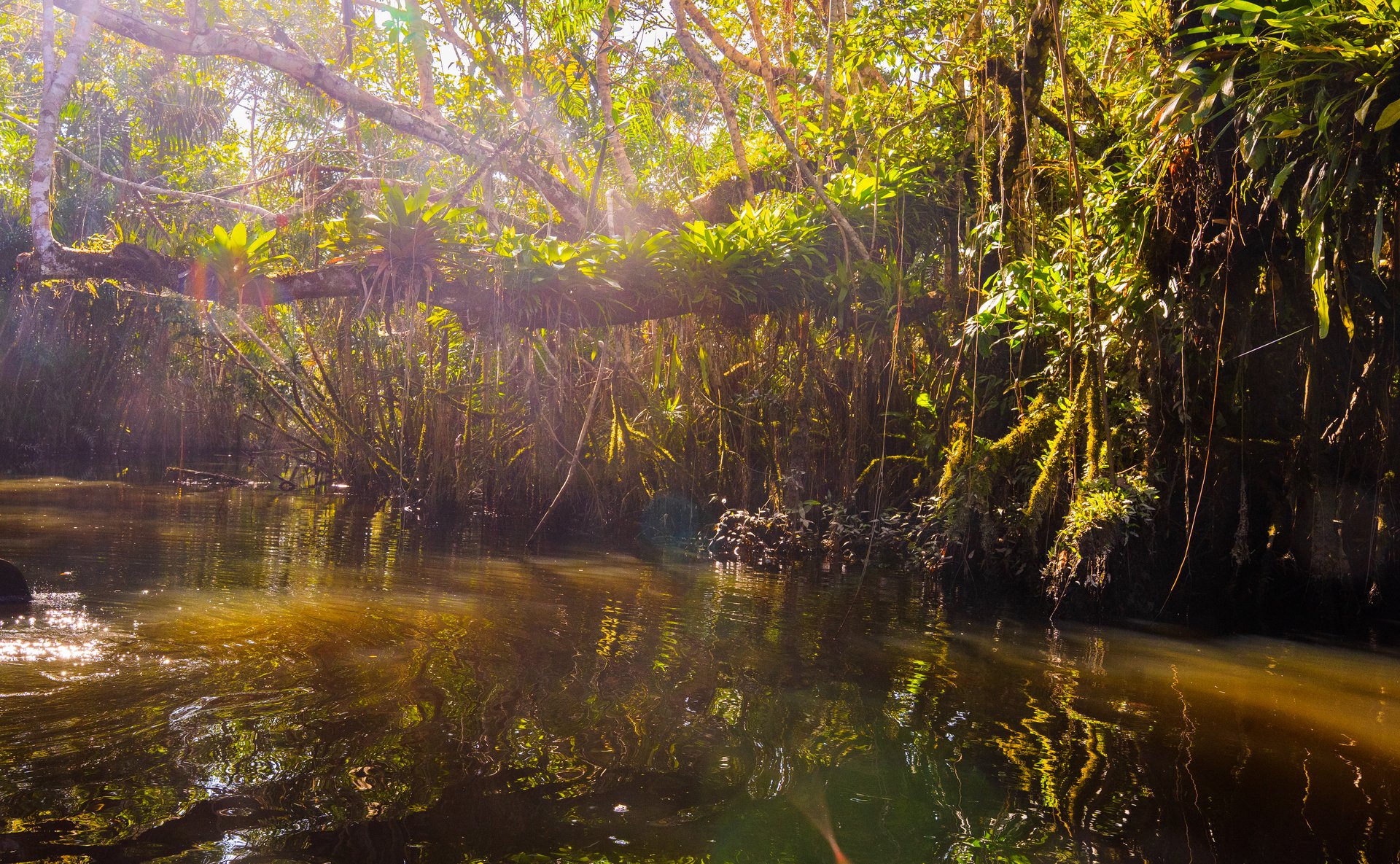
Stepping into the flooded tributaries of the Ecuadorian Amazon is like entering a sanctuary built of light and water. This image tries to convey the heavy, humid stillness of the jungle. As the sun pierces the dense canopy, it transforms the dark, tannin-rich waters into a mirror of liquid gold. Every epiphyte and tangled vine is suspended in this radiant light, capturing a fleeting moment of profound peace in one of the earth's most complex ecosystems
Whispers of the Rainforest
Landscape
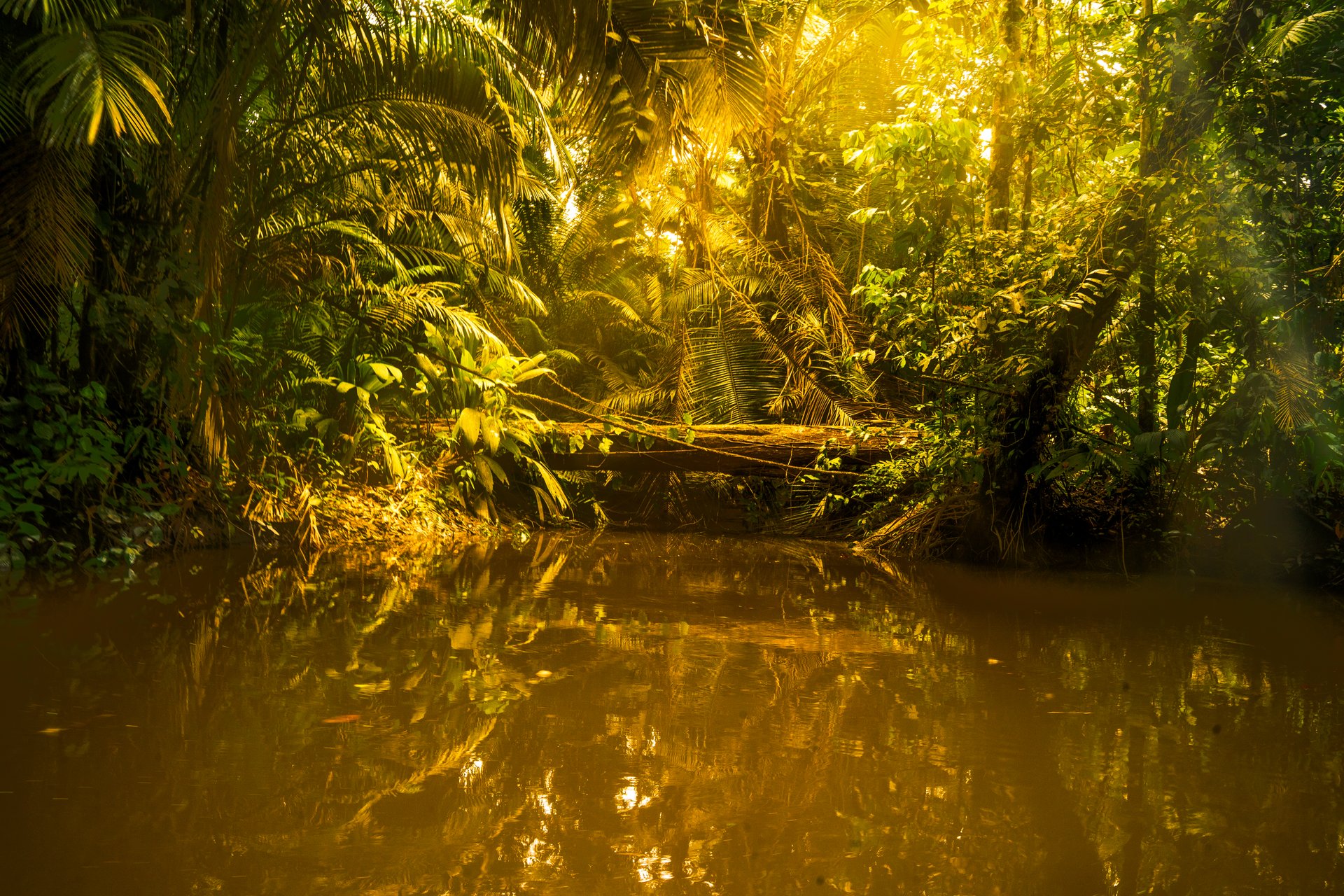
aken during a journey through the Ecuadorian Amazon, this image is a portrait of the rainforest at its most atmospheric: an intimate waterway disappearing beneath an emerald canopy while the setting sun transforms the jungle into a landscape of gold.
Canopy Cruisers
LIFE
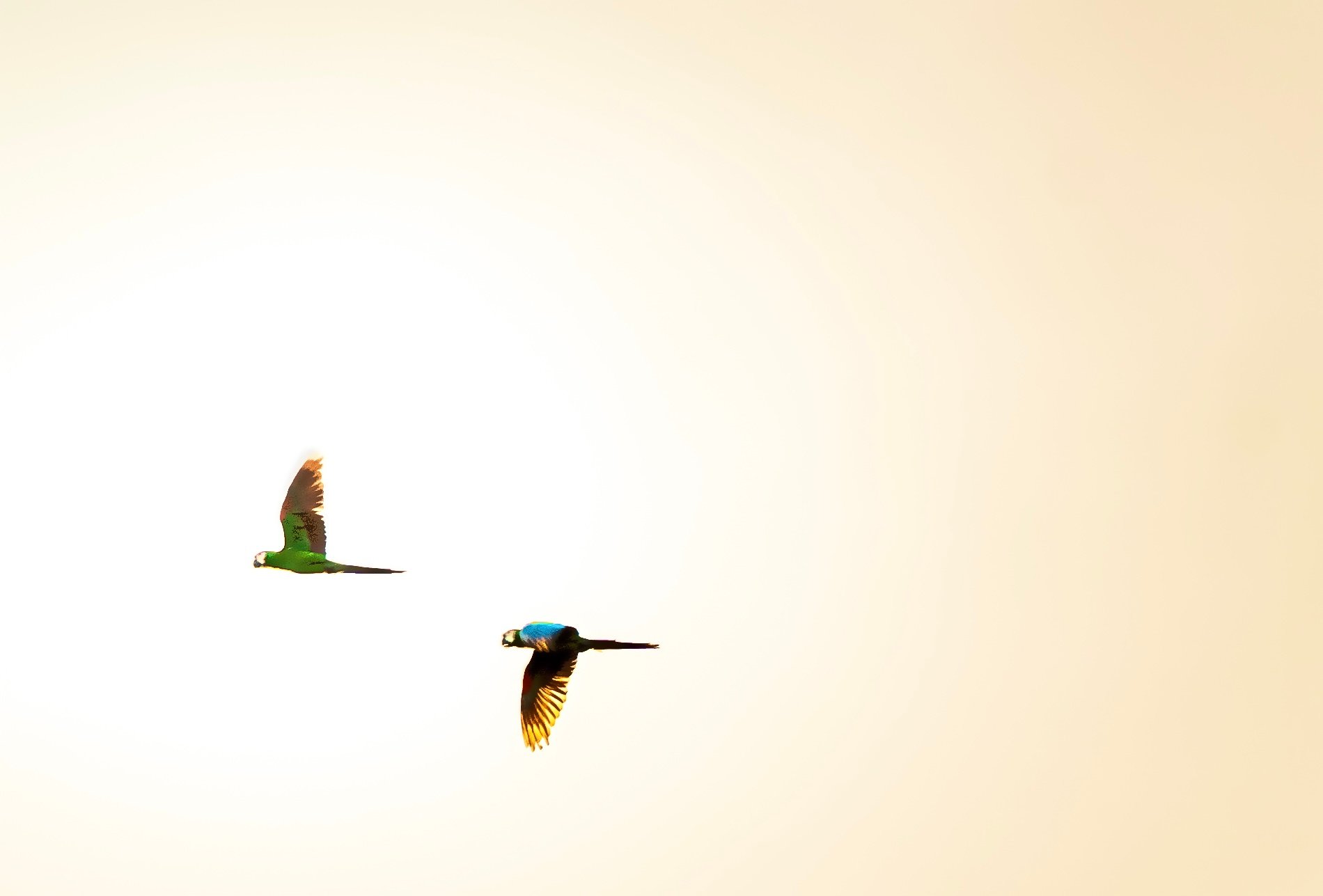
Captured deep in the Amazon rainforest, this dynamic flight shot shows two macaws — one displaying vivid green plumage with rust-toned wing feathers, the other a classic blue-and-gold macaw — soaring in tandem against a luminous, overexposed sky. The high-key lighting blows out the background into soft cream and white tones, throwing the birds' wing shapes and colors into sharp, graphic silhouette. The image captures a quintessential Amazon moment: macaws piercing the canopy light on their daily flight between feeding grounds.
The Amazon rainforest is home to more macaw species than anywhere else on Earth, including scarlet, blue-and-gold, green-winged, and military macaws. Amazonian macaws famously gather in large, noisy flocks at riverbank clay licks (called collpas) to eat clay, which neutralizes toxins from the unripe fruits and seeds that make up much of their diet — a spectacle unique to the region.
Macaws typically mate for life and are frequently seen flying in close pairs, much like the two birds captured here, often calling loudly to stay in contact through dense canopy.
Macaw pairs and small flocks travel long distances each day between roosting sites and scattered fruiting trees, making them a common and beloved sight for anyone traveling the Amazon by river or canopy walkway.
Macaws display problem-solving abilities and social intelligence rivaling primates, and several Amazonian species can learn to mimic dozens of sounds.
The bright plumage of Amazon macaws helps with mate recognition and pair bonding, and — counterintuitively — provides camouflage against the dappled, ever-shifting light of the rainforest canopy.